Application-to-RFQ translation
custom lsv duty profiles
The same cart label can conceal different passenger, cargo, speed, surface, weather and charging needs. Begin with the work the vehicle must perform, then compare factory responses against that duty.
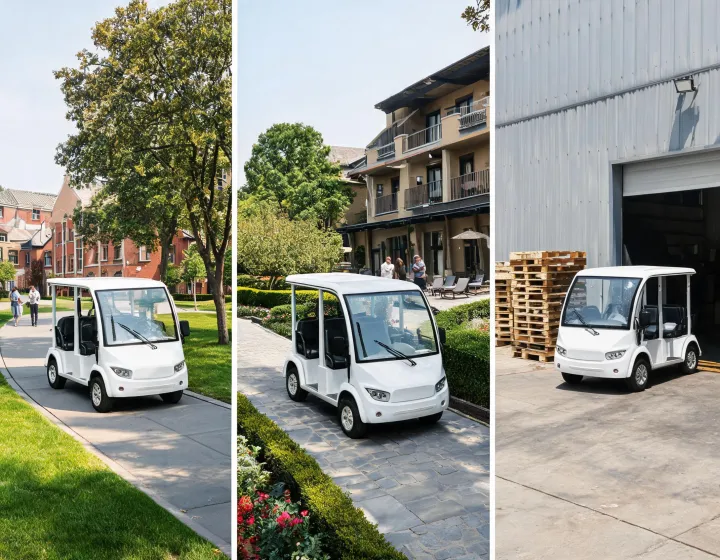
Match Each Vehicle to a Defined Duty
Campus and hospitality passenger loops
Frequent boarding and predictable routes favor a clear seat layout, entry height, weather protection, luggage allowance and shift schedule.
Questions for sourcing
How many seated passengers, what accessibility provisions, which grades and surfaces, what daily distance, and where can vehicles charge and park?
Facility maintenance and cargo movement
Tools, supplies and light towing shift the decision toward payload allocation, deck or box dimensions, hitch assumptions, aisle width and maneuverability.
Questions for sourcing
What is the actual cargo mass and center of gravity, does payload include occupants and accessories, what trailer or hitch is assumed, and which clearances constrain the body?
Community and low-speed transport
Intended public-road or mixed-use operation needs a destination-specific category and equipment review rather than a general speed claim.
Questions for sourcing
Which roads and jurisdiction are intended, what speed class is required, what exact-model documents are offered, and who will confirm registration and import eligibility?
Application Evidence Ledger
| Comparison item | Required basis | Evidence or answer to request |
|---|---|---|
| Passenger capacity | Actual seat and accessibility layout | Configuration drawing and quoted model sheet |
| Payload and towing | Quoted cart, body, occupants and accessories | Rating basis and hitch assumptions |
| Electric range | Usable battery, load, speed, route and climate | Test or estimate basis and charger details |
| Destination use | Exact vehicle category, configuration and model year | Relevant documents for destination-side review |
| Total procurement scope | One quantity, Incoterm and destination | Itemized vehicle, options, inspection and logistics |
Maximum ratings are configuration-dependent. A family maximum does not establish the passenger capacity, payload, towing or range of the quoted cart. Likewise, a test-cycle range is not a promise for a buyer's route.
Application Fit Questions
Keep these decisions visible when a supplier proposes a different body, battery or model.
Can a lower unit price decide the selection?
Only after configurations and exclusions are aligned. A quote omitting charger, inspection, documents or logistics may have a lower headline price but a different procurement scope.
Can nominal battery capacity predict shift coverage?
No. Ask for usable capacity and the range basis, then evaluate load, grade, speed, stops, climate and available charging against your route.
Can a series certificate cover every version?
Do not assume so. Match the offered model, configuration, year and vehicle category to the document and destination review.
Turn the Site Duty into a Factory Question Set
Include route, occupants or payload, quantity, destination, delivery timing and the evidence needed for your decision.
Share Requirements